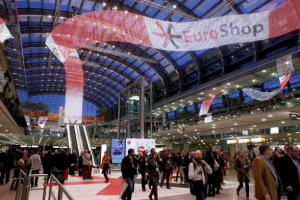
Mannequin Collection Launching at EuroShop 2026
As you may have seen, our sister brands Kesslers London and Genesis Mannequins will be exhibiting at the iconic EuroShop 2026. While Proportion London won’t

Home » How to Lay Out your Museum Exhibit Chronologically
Planning an exhibition in a museum can be daunting. What artefacts do you include, and where do you display them? How should you organise your exhibits so that your visitors can fully understand the story you are trying to tell? Is chronology in museums always best?
Luckily for you, here at Proportion London, we have years of experience helping our museum clients with their visual merchandising and supplying mannequins, busts and other display products to boost their visual merchandising. In this article, we will explore the benefits of a chronological exhibit layout and run through some other exhibition space designs if chronological order doesn’t make the most sense for you, so that you can organise your museum layout in a way that makes the most sense for your visitors!
When exhibition planning, chronology in museums is often a go-to layout. By organising your artefacts in the order that the events happened in, you are able to paint a play-by-play picture of the historical events that happened during the period you’re showcasing. Let’s explore some of the main benefits of organising your museum display in chronological order:
By structuring your museum display chronologically, you are able to provide your visitors with a more immersive experience that has the ability to both educate and engage. This approach not only brings history to life but also ensures a clear, memorable journey through time.
Now that you know the benefits of a chronological museum layout, you probably want to learn how to mimic it within your exhibition space design. Read on to discover our step-by-step guide to achieving chronology in museums.
When you know your museum topic and period, identify key historical events that you want to include in the exhibit and decide on major milestones to help guide your layout decisions.
When exhibition planning, it can be easy to get so swept up in choosing what artefacts to display that you forget about ensuring the layout is clear and easy to navigate. To avoid this mistake, make sure that you have a clear navigational plan. Establish an obvious entrance and exit, and arrange open walkways with clear sightlines, signs and floor markers. Not only does this create an intuitive path that guides visitors smoothly through the timeline, but it helps to maintain flow and reduce bottlenecks.
Divide your museum layout into distinct zones for each period, using colour-coding or decor changes to make transitions between each time zone more obvious. Use mannequins representing historical figures as focal points to highlight key events and pair these with interactive stations to draw attention and encourage more engagement.
The best museum exhibit layouts don’t just rely on the artefacts to move their visitors through time. Incorporate clear signage, visual markers, and strategic lighting to help guide your visitors along the chronological path and around your museum.
We’ve spoken in the past about how visual merchandising can enhance museum exhibition designs. By displaying mannequins in period attire or showcasing artefacts and combining these displays with exhibit graphics, sounds, and interactive technology, you can easily transport your visitors through time in a truly immersive way.
Group your mannequins together to display artefacts that came from the same place and time, and dress them in period-appropriate attire to bring the historical context to life. Position these groupings in different areas to help smooth the transition between time periods.
By following these tips, you will create a chronological museum display that doesn’t just encourage visitors, but engages them as they travel through time throughout your exhibit.
The most important thing to think about when designing your museum exhibit layout is your visitors. What artefact order will work best for them and will leave them with a clear understanding of your museum’s topic?
If you don’t think a chronological museum exhibit design will work for your exhibition and its visitors, there are a number of alternative layouts that you can incorporate instead that will still create a coherent narrative. Let’s explore a few:
If chronology in museums isn’t for you or your visitors, by planning an exhibition with one of these layout designs, you will still be able to guide your visitors around your museum in a logical and easy-to-understand way.
At Proportion London, we have worked with a number of different museums and retail clients to help them improve their visual merchandising and boost their customer experience.
Using our range of products and years of expertise, we help our customers to design and create engaging displays and exhibitions. We have different museum specific mannequin and bust ranges available for both purchase and hire, that include body shapes to support different historical time periods.
Get in touch with us today to discuss your requirements and discover how we can help you.
As you may have seen, our sister brands Kesslers London and Genesis Mannequins will be exhibiting at the iconic EuroShop 2026. While Proportion London won’t

Now 2025 is quickly coming to an end, the team are having a look back at all the iconic moments over the year. Some incredible

2025 was a year filled with exceptional stores, window displays, and of course – fashion. Visual merchandising in London proves every year it is an