
The Ultimate Guide to Displaying Accessories This Winter
As London’s streets light up for the festive season, retailers are refreshing their window and in-store displays. From scarves and jewellery to handbags and hats,
Home » Bust forms vs. mannequins: Which one to use?
If you are in control of the visual merchandising in your retail store or museum, you might be wondering whether to use mannequins or bust forms. While they’re both effective for displaying clothing and accessories, they each serve different purposes and can impact your product displays in different ways. Choosing the right display tool can not only enhance your displays aesthetic, but it can also improve customer engagement, and boost sales.
In this article, we’ll explore the definitions of a mannequin vs. a bust form, break down the differences between bust forms and mannequins and help you to decide which option best suits your needs.
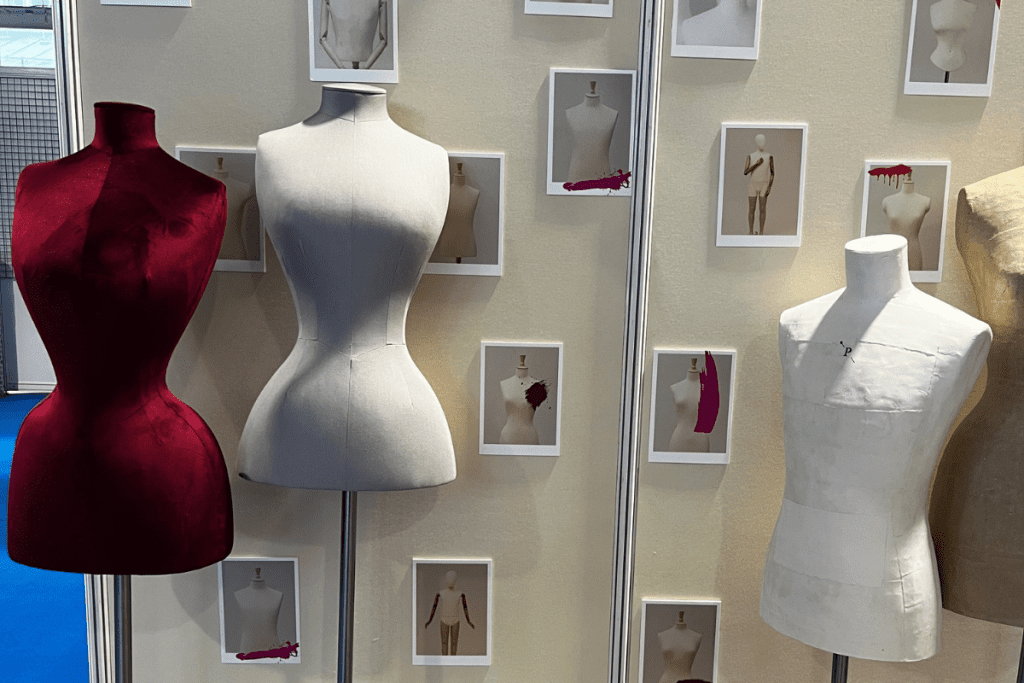
Bust forms are a type of display form that tend to consist solely of the torso, without any arms or head. They can come in a range of different types, including male, female and children’s bust forms, and they are useful for displaying clothes and accessories such as shirts, bras and necklaces.
Bust forms can be manufactured using a number of different materials, including fibreglass, foam and fabric. At Proportion London, our bust forms are handmade using papier-mache and upholstered in natural calico as standard.
Learn more about our bust forms here.
Bust forms have a few different applications. Of course, they are ideal storefront displays for fashion items such as tops, jewellery, scarves and ties, but they are also often used for tailoring and dressmaking as well.
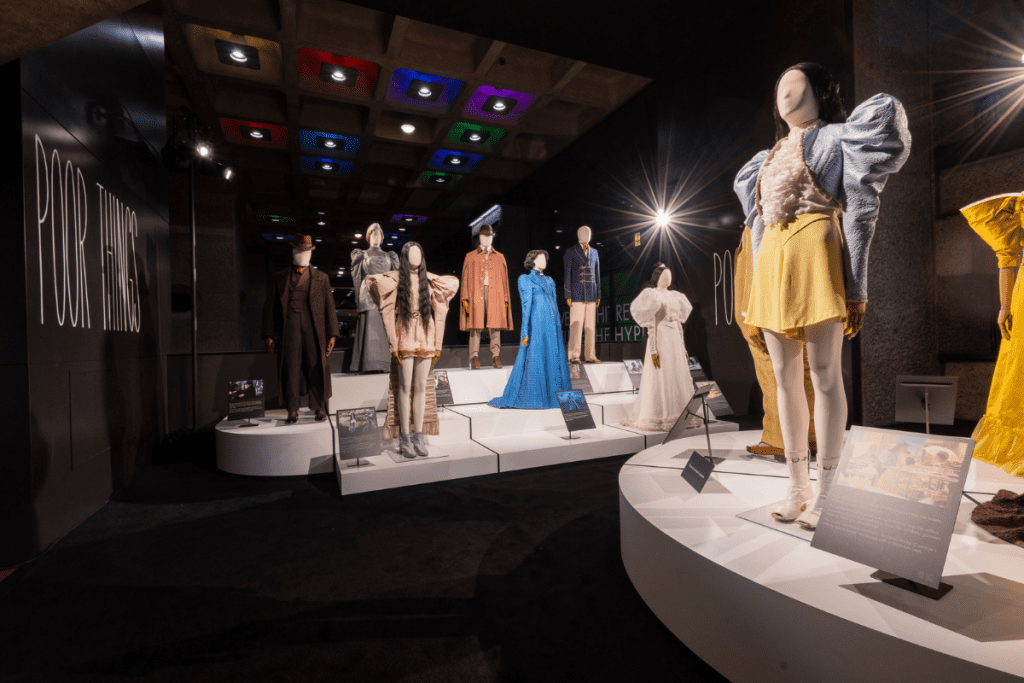
Mannequins are human-shaped 3D models used to display clothing, accessories and historical clothing artefacts in a realistic and lifelike manner. They come in female, male and child forms, and are designed to allow customers to visualise how clothing looks when worn.
Mannequins can come with a range of limbs and accessories, including heads, fixed arms and articulated arms, and can be manufactured out of lots of materials, such as fibreglass, wood or Bio-Resin. Learn more about our Eco Form mannequin, made with Fibrimat and Bio-Resin that contribute to a 13% lower carbon footprint than fibreglass mannequins!
Of course, the main application of mannequins is to be used in visual merchandising displays to showcase full outfits and allow for cross-selling. However, they are often used in museums to display historical clothing, and can even be used in fashion design to replace a bust form.
So, now you know the definitions of each display form, you probably already have an idea of the main differences between them. However, let’s do a side-by-side comparison to make sure you have all the information necessary to determine which you need for your store or museum displays:
The decision of whether to use a bust form or a mannequin for your displays ultimately lands with you. However, there are a few things that you can take into consideration when deciding which route to go down:
With these considerations in mind, you should be able to come to a decision on which form to choose in your visual merchandising displays.
If limited space is not an issue, you might be wondering whether you can incorporate both bust forms and mannequins. The answer is yes! Using both bust forms and mannequins can be an extremely effective strategy to enhance your visual merchandising. By combining the two different display forms, you can create a balanced visual experience that caters to different shopping preferences.
From a retail strategy perspective, using both display types can maximise your merchandising efforts. Bust forms can be used in smaller spaces or areas where you want to draw attention to specific items, while mannequins take centre stage in showcasing full outfits. This combination can create a visually dynamic environment that keeps customers engaged and interested in exploring more of your offerings.
In terms of cost efficiency, investing in both bust forms and mannequins can be a smart move. By mixing the two, displays can be tailored to fit your business needs without overspending, ensuring your investment works effectively for both individual product highlights and larger displays.
At Proportion London, we have over 150 years experience in helping our retail and museum customers with their visual merchandising and display strategies. We offer a range of different full-body mannequins, as well as bust forms and part mannequins, available to both hire and buy, depending on your requirements. Take a look at our different collections that are available and decide which one is right for you.
Contact our team today to discuss your requirements and discover how we can help you.
As London’s streets light up for the festive season, retailers are refreshing their window and in-store displays. From scarves and jewellery to handbags and hats,

Most brands are looking to find a mix of innovative in-store experiences and their core values, leading to a key driving factor of sustainable practices.

How Halloween Inspires Creative Risk in London Visual Merchandising London retailers always like to take Halloween seriously. And they should! When store windows are the

Navigation
Keep in touch
Join our mailing list
Registered No 9949678 – VAT GB 279 6958 20 – Privacy Policy