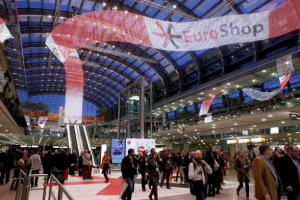
Mannequin Collection Launching at EuroShop 2026
As you may have seen, our sister brands Kesslers London and Genesis Mannequins will be exhibiting at the iconic EuroShop 2026. While Proportion London won’t

Home » Mannequins in Fashion Marketing
When you think about marketing in the fashion industry, there are probably a few obvious techniques that come to mind; websites, social media, tv adverts and perhaps even mannequins! Mannequins are an integral part of fashion marketing, and form the basis of most retail environments.
Luckily, here at Proportion London, we live and breathe all things mannequins and visual merchandising. In this article, we are going to explore what fashion marketing is, how mannequins fit into fashion marketing, and whether fashion mannequins are any different from other mannequins.
Fashion marketing is a specialised branch of marketing that focuses on the promotion of clothing and accessories within the retail space. It encompasses a range of strategies aimed at creating awareness of fashion brands, attracting customers, and driving sales.
Key strategies within fashion marketing include branding, advertising and promotion, visual merchandising, fashion shows, ecommerce, social media and public relations.
Fashion marketing is an ever-evolving field that responds to changes in consumer tastes, technology, and cultural influences. Successful retail businesses are able to use fashion marketing to stay current with industry developments, understand their target audience, and create compelling campaigns that resonate with consumers, resulting in increased sales.
Mannequins are a vital part of fashion advertising, as they are the best and easiest way for consumers to visualise what an item of clothing, accessory or outfit will look like on them. They are often strategically placed, both in window displays and throughout the store, to showcase items that work well together and pique the interest of potential customers.
Mannequins allow retailers and visual merchandisers to create aspirational displays that convey a desired lifestyle, aesthetic or fashion trend. Their inherent ability to cross-sell means that retailers are able to easily convince consumers to buy a full outfit, rather than just a single item.
In recent years, mannequins have become much more diverse, meaning that customers of all body types, skin tones and features are able to see themselves represented in a company’s marketing efforts. This means that brands are able to form deeper, emotional connections with a more diverse audience and demonstrate their commitment to inclusivity. This increased diversity has a big impact on the consumer, and therefore can lead to increased revenue for retail stores.
Finally, mannequins help create immersive shopping experiences, visually communicate a brand’s message, and drive sales. They are a bridge between the fashion brand’s vision and the customer’s imagination, allowing consumers to envision themselves in the clothing and lifestyle presented by the brand.
Fashion mannequins can differ from other mannequins, such as those used in museums, as they have different purposes meaning their characteristics are tailored to their specific roles. As we’ve already discussed, the main objective of fashion mannequins is to showcase clothing and accessories in an eye-catching, aesthetically pleasing way, convincing potential customers to purchase. These mannequins are often designed to be stylish, modern, and minimalist in design, with the focus on the display of the clothing rather than on the mannequin itself.
Fashion mannequins often come in various poses, or with articulated features that can be manipulated ,to highlight the clothing they wear, and to convey a sense of style, movement, and personality.
They are typically made from materials like fibreglass or plastic, with finishes that emphasise the clothing’s look, and may have minimal facial features or abstract heads. They are meant to be easily dressed and redressed as styles change, often including wigs to enhance the overall look, and may be adorned with accessories such as sunglasses, jewellery, or shoes to complete the outfit.
In contrast, museum mannequins are used to display historical artefacts or clothing. Their primary role is to present objects of cultural and historical significance, and so they are designed to be unobtrusive and blend into the background, drawing minimal attention to themselves. Because of this, they often have neutral poses and expressions.
These mannequins are typically made from materials that are durable to withstand long periods of time, such as resin or foam. Museums also use conservation grade fabrics and, here at Proportion London, we make conservation torsos that are specifically designed to protect delicate fabrics.
Unlike their cousins in the retail space, museum mannequins aren’t changed frequently, as their purpose is to provide stability for the objects they display and they are usually used for long-term exhibitions.
At Proportion London, we understand the pivotal role mannequins play in fashion marketing. Our commitment to delivering high-quality, versatile mannequins allows us to cater to your specific needs. Whether you seek to present the latest trends in high street shops, luxury retail spaces, or cultural institutions like museums and displays, our diverse range of mannequins to buy or hire is tailored to meet the demands of the fashion world.
Get in touch with us today about your unique requirements. Proportion London is here to be your partner in crafting compelling, visually captivating displays that not only tell your brand’s story but also drive success in the competitive world of fashion marketing.
As you may have seen, our sister brands Kesslers London and Genesis Mannequins will be exhibiting at the iconic EuroShop 2026. While Proportion London won’t

Now 2025 is quickly coming to an end, the team are having a look back at all the iconic moments over the year. Some incredible

2025 was a year filled with exceptional stores, window displays, and of course – fashion. Visual merchandising in London proves every year it is an