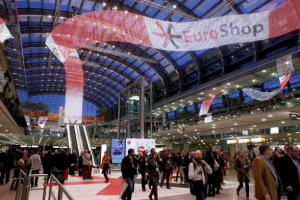
Mannequin Collection Launching at EuroShop 2026
As you may have seen, our sister brands Kesslers London and Genesis Mannequins will be exhibiting at the iconic EuroShop 2026. While Proportion London won’t

Home » Visual merchandising for men vs. women
If you own a store that sells products aimed at both men and women, you might be wondering whether your visual merchandising efforts will depend on which department you are designing. In this blog, we will explore how men shop compared to how women shop, run you through some of the similarities and differences in advertising and visual merchandising between males and females, and help you decide whether you need a whole new visual merchandising strategy to market to men. Let’s jump in!
Now, this isn’t a stereotype, but women are more likely to shop than men. In fact, according to research by Capital One, 39.4% of American women shop on any given day, compared to 33.7% of men, and are responsible for between 70% and 80% of all consumer purchasing decisions. On top of this, Paymentsense found that women spend 40% longer shopping than men. So it’s backed up by data that women like to shop more than men!
As well as the frequency and time spent browsing the stores or online, there are a number of differences between men and women’s shopping behaviour. For example, men tend to have a more task-oriented approach to shopping, whereas women have a more detail-oriented, experiential approach. Therefore, women are more likely to
browse and make compulsive purchases than men. Studies have shown that male brains have more connections within hemispheres to optimise motor skills, whereas female brains are more connected between hemispheres to combine analytical and intuitive thinking. This could be the reason behind the different shopping behaviours.
Because of the differences in shopping and purchasing habits, there is an argument for separating your visual merchandising techniques out depending on who you are selling to. Let’s first explore how to sell to men, before comparing these strategies with how to sell to women!
As we’ve already mentioned, how to market to men is different to how to market to women. Men are less detail-oriented and more focused shoppers than their female counterparts. With this in mind, when designing a store layout for the male consumer, create straightforward, linear pathways to guide the customer effectively, and strategically place essentials and featured products near entrances and tills. Make use of eye-level displays and clear signage, and when deciding on your product placement, consider grouping products by their function, rather than by their style.
Ensure that your displays aren’t overcomplicated. The aim is to guide the consumer, not confuse them, so make sure to highlight the key product benefits in any signage that you incorporate, and keep your layouts easy to follow.
When marketing to men, simple and clean layouts that highlight the functionality of the products tend to do better. In signage and design, use neutral colours and dark tones, with the occasional bold accent and pop of colour to attract attention.
On the other hand, women are more likely to browse the entire store for inspiration, rather than look for the one thing they need. To encourage browsing, make use of creative product arrangements and more winding paths. This will help customers to stay longer in the store. By incorporating focal points and ‘essentials’ displays along the way will help to facilitate complementary purchases and impulse buys.
Don’t be tempted to overcrowd your displays with too many products or colours in the attempt to create creative displays. Telling a story through consistent themes and colour coordination is one of the most important strategies to include when marketing to women.
When designing the store, no colour is off limits! Make sure your design uses complementary colours and integrates patterns to create a cohesive look. Vibrant colours will attract attention, while colour coordination and lifestyle themes will help the shopper to visualise how their life would be with your products.
A common misconception that merchandisers make is to organise your store or department based only on the target audience – the end user isn’t always the one shopping. Birthdays, Christmases and other holidays can find women shopping for men and men shopping for women, so by failing to market to both genders, you could be missing out on those all important sales!
So, how can you display your products to work for everyone? Let’s explore some tactics to help your store and its products appeal to both men and women:
These tactics can help your store to appeal to both men and women, creating a shopping environment that is inclusive, engaging, and more successful.
If you want to redesign your shop to cater for everyone, regardless of their gender, we are here to help! We have been helping global retailers and museums to showcase their products in a visually appealing way since our conception in 1967.
We have a range of mannequins, busts and rails for sale or hire to cater to all customers, as we can also design and manufacture bespoke creations to meet your requirements.
Get in touch with our team today to see how we can help you.
As you may have seen, our sister brands Kesslers London and Genesis Mannequins will be exhibiting at the iconic EuroShop 2026. While Proportion London won’t

Now 2025 is quickly coming to an end, the team are having a look back at all the iconic moments over the year. Some incredible

2025 was a year filled with exceptional stores, window displays, and of course – fashion. Visual merchandising in London proves every year it is an