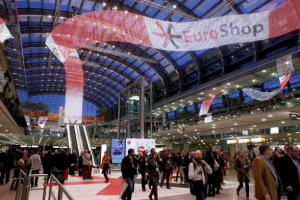
Mannequin Collection Launching at EuroShop 2026
As you may have seen, our sister brands Kesslers London and Genesis Mannequins will be exhibiting at the iconic EuroShop 2026. While Proportion London won’t

Home » Visual Merchandising for multi-channel retailers
In today’s digital environment, consumers are constantly switching between online and offline shopping. Because of this, having a consistent visual merchandising strategy that can be seamlessly blended across multiple channels is vital for retailers.
In this article, we’ll answer common questions we get asked, such as ‘what is a multi-channel retailer?’ and ‘how do you come up with a multi-channel strategy?’. We’ll also be exploring how retailers can use visual merchandising to create consistent brand experiences across physical and digital storefronts and give you some visual merchandising ideas to use in your multi-channel marketing strategies.
Visual merchandising is the strategic presentation of products in order to attract customers and boost sales, both in-store and online. It involves using visual elements such as displays, lighting, colour schemes, and store layouts to create an engaging brand experience. By carefully designing these elements, retailers can guide customers through their space, impacting their purchases and driving repeat custom.
Key components of visual merchandising include focal points, space, colour, lighting and positioning. These components work together to attract consumers and evoke certain emotions within potential customers.
When we say ‘multi-channel retailing’, we are referring to businesses that engage their customers through a number of different sales channels, both online and offline. These channels can include websites, physical stores, social media platforms, mobile apps and catalogues.
Having multiple ways for consumers to engage with the brand means a wider audience, more opportunities to make sales, and a bigger profit. In fact, multi-channel shoppers can spend up to three times more than single-channel shoppers!
However, despite the obvious benefits of introducing multiple touchpoints, multi-channel retailing also requires a consistent experience across all channels in order to maintain customer satisfaction.
So, now we’ve answered ‘what is multi-channel retailing?’, let’s explore some of the main advantages of multi-channel retailers over their single-channel counterparts!
One of the most significant benefits of multi-channel retailing is the ability to reach a wider audience. By offering products across physical stores, online platforms, social media, and marketplaces like Amazon or eBay, retailers can connect with customers wherever they prefer to shop. Not only does this capture a broader audience, but it also caters to different shopping preferences, making it easier to attract new customers and retain existing ones.
More channels mean more opportunities to generate sales. With multi-channel retailing, retailers can engage customers at multiple touchpoints along their journey. For example, a customer might first see a product on social media, then visit the retailer’s website to explore further, and finally make the purchase in-store.
On top of this, having an online presence extends store hours, allowing customers to shop 24/7. This flexibility can lead to an increase in overall sales, as customers are no longer limited by stringent time restrictions or locational challenges. With the right multi-channel strategy in place, retailers can utilise each channel to increase sales.
With an increased customer reach and more sales opportunities, it’s a no-brainer that implementing a multi-channel strategy will also boost your revenue. In fact, according to a report by Stitch Labs, retailers who sell across two channels see 190% more in revenue than those who only sell on a single marketplace!
Multi-channel retailing also provides businesses with more flexibility and resilience and ensures that sales are maintained if one channel isn’t performing. If we’ve learnt anything from the COVID-19 pandemic, it was that retailers with robust online presences were able to continue operating from strength to strength, whereas physical stores had no choice but to shut down.
This diversification of sales channels helps retailers navigate challenges more effectively and adapt to changing consumer behaviours, making their business more resilient to market fluctuations.
Selling across multiple channels has a whole host of benefits, some of which we’ve already discussed. But you have to get your multi-channel strategy right in order to reap the rewards! Let’s discuss why consistency is so important across your different sales points.
A consistent brand experience builds trust and familiarity, allowing customers to transition seamlessly between your physical stores, website, and social media. Maintaining similar visual elements – such as branding, colours, messaging, and product presentation – across these channels creates a unified shopping experience that strengthens your brand identity and helps you to become memorable among potential customers.
Take Nike, for example. A global brand with hundreds of stores across the world, Nike has nailed their multi-channel consistency! Whether you visit one of their physical stores, shop on their website, or browse their social media, the visual merchandising is aligned. In-store mannequins reflect the same styles and collections showcased online, the messaging is uniform across all platforms and their photography style is consistent regardless of where you see them.
This level of consistency not only reinforces brand recognition but also enhances the customer experience, making it easier for shoppers to engage with the brand regardless of where they choose to shop.
Wondering how to maintain your consistency across your website, shop and social media? Don’t worry, we’re here to help with some handy visual merchandising tips to enhance your multi-channel strategy!
The pillar of creating a cohesive customer experience is implementing a consistent brand identity across all channels. From social media ads to in-store displays, visual elements such as colours, logos and fonts should be uniform in order to create a look that is instantly recognisable. Full service creative agencies can help to ensure your brand identity remains harmonious across your web, digital and print marketing, reinforcing your brand’s presence and increasing brand recall.
On top of ensuring your branding is consistent across your marketplaces, another important consideration is replicating the experience that your customers get in your physical store and translating it to digital platforms. This can be challenging to get right, however it is possible!
One way to do this would be to invest in high-quality product images and showcase 360° views of every product. This can be done either through hiring models to showcase your products across different bodies, or using the same mannequins you have in your store to display your products online. You could also incorporate product videos and virtual try-ons like Prada’s ‘try it on’ feature to ensure the online customer experience is as positive as it would be in store.
One of the foundations of a successful visual merchandising strategy is telling a story through your displays. Storytelling can evoke emotions within your customers, helping them to connect with your brand on a deeper level. By extending this across all of your channels through displays, website banners, email marketing campaigns and social media content, you can craft a cohesive narrative, whether it’s about a new seasonal collection, a product’s unique features or your own brand story.
Your marketing campaigns and merchandising strategies should work hand-in-hand across channels. For example, if you’re running a promotion in-store, make sure it’s also running on your website and promoted on your social media platforms as well. Consistent messaging, visuals, and calls to action across social media ads, email newsletters, and in-store signage help reinforce your campaign’s impact and ensure customers are aware of offers wherever they shop.
By unifying your visual identity, using storytelling in your marketing efforts and ensuring your merchandising and marketing work together, you can create a seamless visual merchandising strategy that enhances the customer experience across all channels.
At Proportion, we have years of visual merchandising experience, helping our retail and museum customers to make the most of their multiple channels and ensure consistency across them.
We offer a huge selection of different mannequins, busts and accessories that you can use to display your products across both physical and digital channels, and you have the choice of purchasing or hiring them – whatever suits you best!
Browse our different collections or contact us today to discuss your specific requirements.
As you may have seen, our sister brands Kesslers London and Genesis Mannequins will be exhibiting at the iconic EuroShop 2026. While Proportion London won’t

Now 2025 is quickly coming to an end, the team are having a look back at all the iconic moments over the year. Some incredible

2025 was a year filled with exceptional stores, window displays, and of course – fashion. Visual merchandising in London proves every year it is an