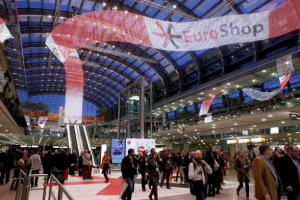
Mannequin Collection Launching at EuroShop 2026
As you may have seen, our sister brands Kesslers London and Genesis Mannequins will be exhibiting at the iconic EuroShop 2026. While Proportion London won’t

Home » What is a ghost mannequin?
In fashion photography, precision and presentation are everything. The concept of the ghost mannequin has become key to the fashion industry, and although it might sound eerie at first, it has become a technical yet transformative approach to showcase clothing.
Whether you’re a fashion photographer, brand manager for an online clothing store, or someone working in the design or manufacturing of mannequins, understanding ghost mannequin photography is essential. As digital shopping continues to grow, so does the demand for clean, consistent product imagery. And this is where the ghost mannequin comes in.
A ghost mannequin is not a product, but rather a photography technique. Also known as the “invisible mannequin” or “hollow man” effect, it allows garments to be displayed on a form, without the form being visible in the final image. The result is a clean, three-dimensional photograph of an item of clothing that appears to be floating or worn by an invisible model. This allows customers to see how the garment would look on a body, without any distractions.
The process typically involves photographing a garment on a mannequin and then editing out the mannequin, often by combining multiple shots of the same item from different angles. This technique creates a high-quality, professional image that highlights the structure, fit, and design of the clothing.
With online retail becoming increasingly visual, and the absence of physical fitting rooms, consumers rely on imagery to assess whether a product meets their expectations. According to a study by Shopify, 75% of online shoppers rely on product photos when deciding on a potential purchase. It is not enough to just show a piece of clothing laid flat or on a hanger. To sell successfully online, garments must be presented as though they’re being worn, offering shape, context and visual integrity.
Ghost mannequins help to bring garments to life while keeping the presentation neutral and brand consistent. The approach is now used across the industry, from high street retailers to luxury labels and independent fashion designers.
Ghost mannequin photography may appear seamless but behind each image lies a carefully coordinated process.
First, the item is photographed on a mannequin with detachable body parts such as necklines, shoulders or arms. Then, a second set of images is taken without the mannequin present. These might involve photographing the inner label or neck area, especially for shirts, dresses or jackets where the back of the collar or the inside lining contributes to the garment’s overall structure.
These image sets are then combined in editing software to remove the mannequin and align all layers. The end product is an image that showcases the garment with volume, detail and shape, but with no visible human or dummy presence.
Over the past decade, the use of ghost mannequins has moved from being an experimental approach to an industry standard. Brands with large catalogues of clothing such as Shein use this technique across their e-commerce platforms. This allows them to maintain a cohesive look across hundreds, if not thousands, of Stock Keeping Units.
The rise of fast fashion means brands need faster, more efficient ways to produce high quality images of their clothing. Ghost mannequin photography provides a fast and scalable way to shoot products that can be published online within days of arriving in inventory. Unlike live models, mannequins don’t require breaks, contracts or styling. And unlike flat lays, ghost mannequin imagery offers depth and fit context that helps reduce returns which is a key concern in online retail.
While photographing clothes on live models remains popular particularly for editorial campaigns and lookbooks, ghost mannequin photography serves a different purpose to inform and persuade, offering a product-centric view that strips away all other visual noise.
The technique is especially useful when brands want to keep the focus entirely on the garment’s cut, stitching, material and shape. It also avoids the potential issues that come with working with models: sizing inconsistencies, styling variables, or the high cost of talent and production.
Despite its many advantages, ghost mannequin photography does come with its challenges. High-quality results require skill, both behind the camera and in the editing suite. Lighting needs to be uniform and consistent to avoid shadows and mismatches. The garments themselves must be steamed, pinned and carefully arranged on the mannequin to simulate a flattering fit.
Clothing that is sheer, heavily patterned, or made from reflective material can also be harder to edit. In some cases, photographers may choose to work with transparent mannequins or employ 3D rendering instead. But for most purposes, traditional ghost mannequin techniques remain the go to solution.
For businesses, the decision to use ghost mannequin photography should also consider their brand identity. This style of presentation might suit a minimalist fashion label, but may not align with a brand that trades heavily on personality or lifestyle imagery.
From the perspective of the mannequin manufacturing industry, the rise of ghost mannequin photography has prompted innovation in the design of display figures. Modern ghost mannequins are often built with detachable limbs, neck pieces and modular components to make the editing process easier.
As demand continues to rise, mannequin designers are now creating figures specifically for the ghost process, acknowledging that their products are no longer meant to be seen, but rather to be seen through.
With AI and 3D modelling impacting digital fashion, some people have questioned whether ghost mannequin photography will eventually be replaced by fully digital renders or virtual try on tools. While technology is evolving rapidly, there remains a strong need for authentic, tangible visuals that reflect the true garments.
For now, the ghost mannequin offers a rare combination of efficiency, realism and aesthetic control. It serves the practical demands of e-commerce while still offering consumers the visual cues they need to make informed purchases.
At Proportion London, we understand the artistry and technical demands of ghost mannequin photography. That’s why we design and manufacture mannequins that are perfectly suited to this technique, complete with removable sections, matte finishes and anatomically correct forms for precise garment display and seamless post production editing.
Our mannequins are trusted by fashion retailers, photographers and studios around the world to produce clean, compelling imagery that elevates every item of clothing. Get in touch today to discover how we can help bring your garments to life.
As you may have seen, our sister brands Kesslers London and Genesis Mannequins will be exhibiting at the iconic EuroShop 2026. While Proportion London won’t

Now 2025 is quickly coming to an end, the team are having a look back at all the iconic moments over the year. Some incredible

2025 was a year filled with exceptional stores, window displays, and of course – fashion. Visual merchandising in London proves every year it is an