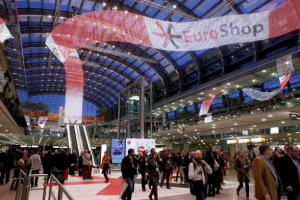
Mannequin Collection Launching at EuroShop 2026
As you may have seen, our sister brands Kesslers London and Genesis Mannequins will be exhibiting at the iconic EuroShop 2026. While Proportion London won’t

Home » How to incorporate movement into your visual merchandising
Visual merchandisers and shop owners are constantly on the hunt for more creative visual merchandising techniques to implement into their stores. One such technique is the incorporation of movement and motion into product displays and signage in order to catch the attention of potential customers.
In this article, we will remind you what visual merchandising is, discuss the types of motion that you can include in your visual merchandising efforts, explore the importance of movement in visual merchandising and provide tips on how to successfully create movement in your visual merchandising. Let’s get straight into it.
Visual merchandising is the strategic and creative presentation of products within a retail store or online, with the aim to attract potential customers and boost sales. There are a number of different components within visual merchandising:
Each of these components can be used to create a compelling product display that engage the senses and convince the viewer to make a purchasing decision.
Movement is another easy way of piquing interest in potential customers. Luckily, there are a number of different types of movement in visual merchandising. Let’s take a look at three different types of movement within visual merchandising and the benefits of each:
Probably the easiest way of incorporating motion and movement into your merchandising efforts is through digital means. Digital movement refers to the use of electronic displays and interacting technologies to create dynamic elements. These means include things like digital screens for billboards and signage, LED displays behind shelving that change colours or patterns, and interactive kiosks that respond to information put in by the customer, allowing them to browse products that are in stock.
There are a number of different benefits of digital movement in your retail store:
As with everything, however, there are also some drawbacks of installing digital movement displays:
Similar to digital movement, interactive elements, such as touch-sensitive displays and AI experiences, are a great way to incorporate motion and excitement into your visual merchandising efforts. They can create a more immersive, personalised shopping experience for customers, increasing the likelihood that they will make a purchase. These elements can include things like touch-sensitive product displays that give more information and virtual reality fitting rooms that allow customers to see how a product will look on them without trying it on. Interactive elements such as these allow customers to engage directly with the display or product through touch.
Charlotte Tilbury, for example, has recently launched a virtual makeup try-on on their website, that allows potential customers to ‘try on’ different lipstick colours, blushes and eyeshadows. This allows consumers to visualise these products on themselves from the comfort of their own home without having to purchase them first.
Like with digital movement such as video billboards, interactive displays have various benefits:
Despite interactive displays being a fantastic way to personalise the customer experience and increase their time in the store, there are a number of other factors to consider:
Mechanical movement is probably what immediately comes to mind when you think ‘motion in merchandising’. By incorporating things such as moving mannequins, elaborate motorised window displays and rotating product carousels, mechanical movement can create a dynamic, engaging scene that could catch the customer’s eye and draw them into the store.
There are lots of benefits of installing mechanical mannequins or displays into your physical retail store:
Incorporating mechanical movement into visual merchandising can significantly enhance the visual appeal and engagement level of displays, however, it requires thoughtful consideration into a few different factors:
Whatever type you choose to implement, movement can be an important factor of visual merchandising. Whether you choose to implement it in your physical store or online platform, movement can significantly improve the effectiveness of your displays. It can serve as an effective tool to capture customers’ attention and encourage them to make a purchase.
For example, research has shown that digital billboards can increase engagement by up to 400% compared to traditional static billboards! This highlights how dynamic elements can make you stand out in a crowded retail environment and draw in potential customers that may have passed by a static display.
Movement not only attracts attention but also keeps people engaged for longer. When tested with digital advertisements in London Bridge train station, twice as many people looked at the digital poster than the static one, and people spent an average of 60% longer looking at the digital advertisement than the fixed one. This increased browsing time can translate into more sales.
Adding movement into your visual merchandising efforts can help to tell your brand story or convey a theme, building stronger emotional connections with consumers and making the experience more memorable. However, this movement should be incorporated in a strategic and balanced manner to avoid overwhelming customers and spending unnecessary money.
We have a lot of experience with helping our customers design beautiful product displays that catch the attention of potential customers. Adding movement into your displays can be challenging, so please find some of our top tips below:
At Proportion London, we live for visual merchandising. We have decades of experience in helping our customers, both in retail and museum spaces, creating engaging displays through our industry knowledge.
Our product range includes a variety of mannequins for purchase or hire, tailored to your specific requirements and created to elevate your displays. Contact us today to discuss your needs and learn how we can help you bring your vision to life.
As you may have seen, our sister brands Kesslers London and Genesis Mannequins will be exhibiting at the iconic EuroShop 2026. While Proportion London won’t

Now 2025 is quickly coming to an end, the team are having a look back at all the iconic moments over the year. Some incredible

2025 was a year filled with exceptional stores, window displays, and of course – fashion. Visual merchandising in London proves every year it is an